Key takeaways from the European Economic Congress 2026: Europe needs speed, sovereignty, and execution
EEC 2026 ran for three days in Katowice, featuring panels on space, industry, energy, and defense, among others. A recurring question emerged: Can Europe move fast enough to stay competitive? Most speakers agreed that the main issue is execution speed. The strategies are already in place.
Four key points stood out for us:
- Space is becoming a strategic industry. Polish companies have the right capabilities, but the sector lacks coordinated financing and a stronger supplier base.
- Polish-French cooperation has practical value. France offers expertise in aerospace, nuclear, and defense; Poland contributes not only a growing market, but also engineering talent, technical expertise, and the potential to deliver subsystems and solutions for the defence and aerospace sectors. Together, they are closer to achieving European autonomy than many strategy papers suggest.
- Talent needs a clearer path into industry. Poland has a pool of ambitious young engineers and growing space expertise. The next step is to connect this potential with real projects, internships, companies, and long-term industrial work.
- Software is no longer just a support tool. In sectors with strict regulations and complex supply chains, good systems help teams move faster, make better decisions, and keep complex operations under control.
For Iterative Engineering, the themes discussed at EEC 2026 are not distant trends. They are already part of our work in space, energy, oil & gas, and industry. In these sectors, the challenge is often the same: operations are becoming more complex, while teams need to move faster, keep control, and make better decisions.
“Strategic industries do not need more abstract talk about innovation. They need tools that help people execute.” – Krzysztof Gąsior, CEO, Iterative Engineering
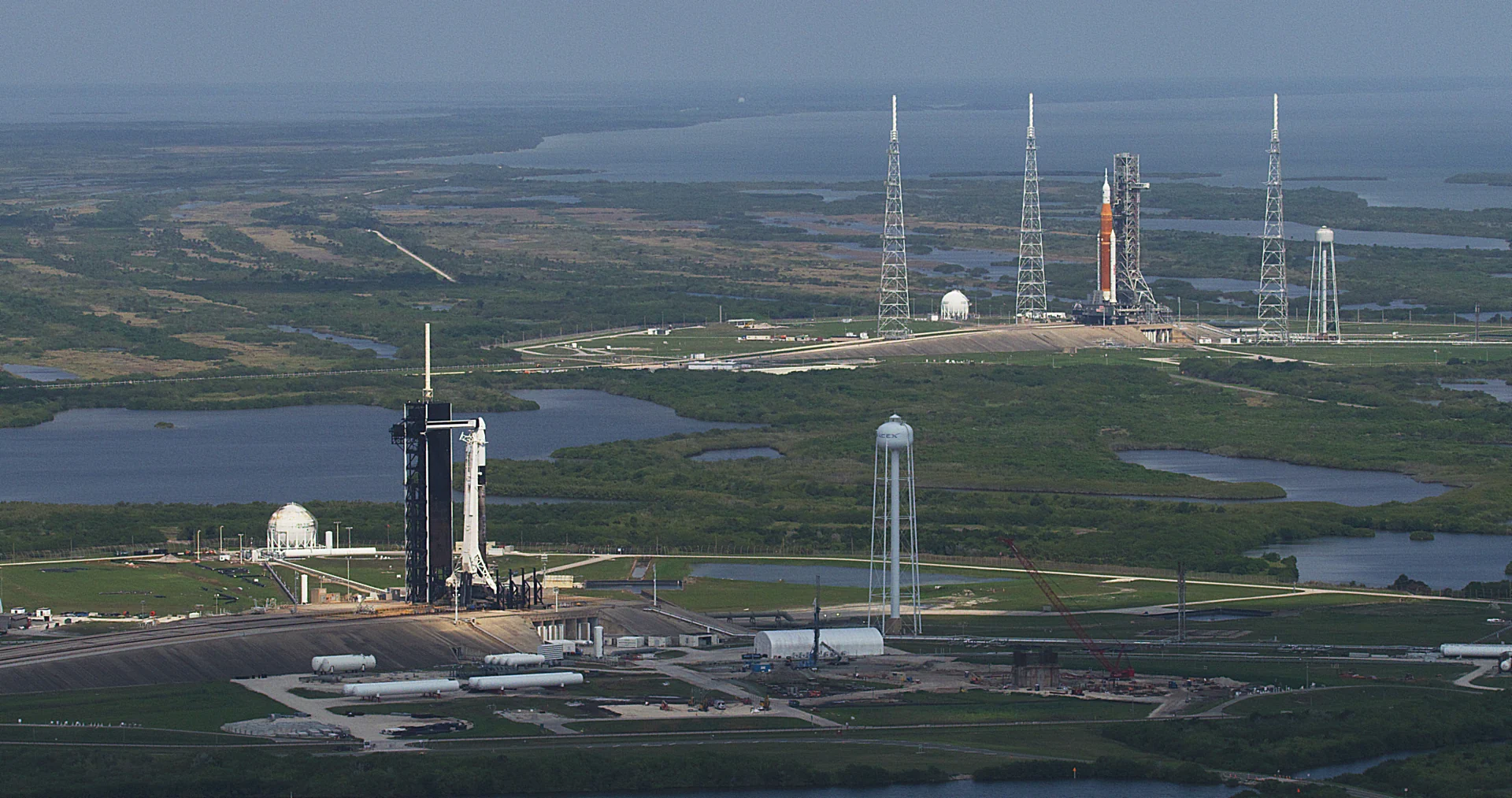
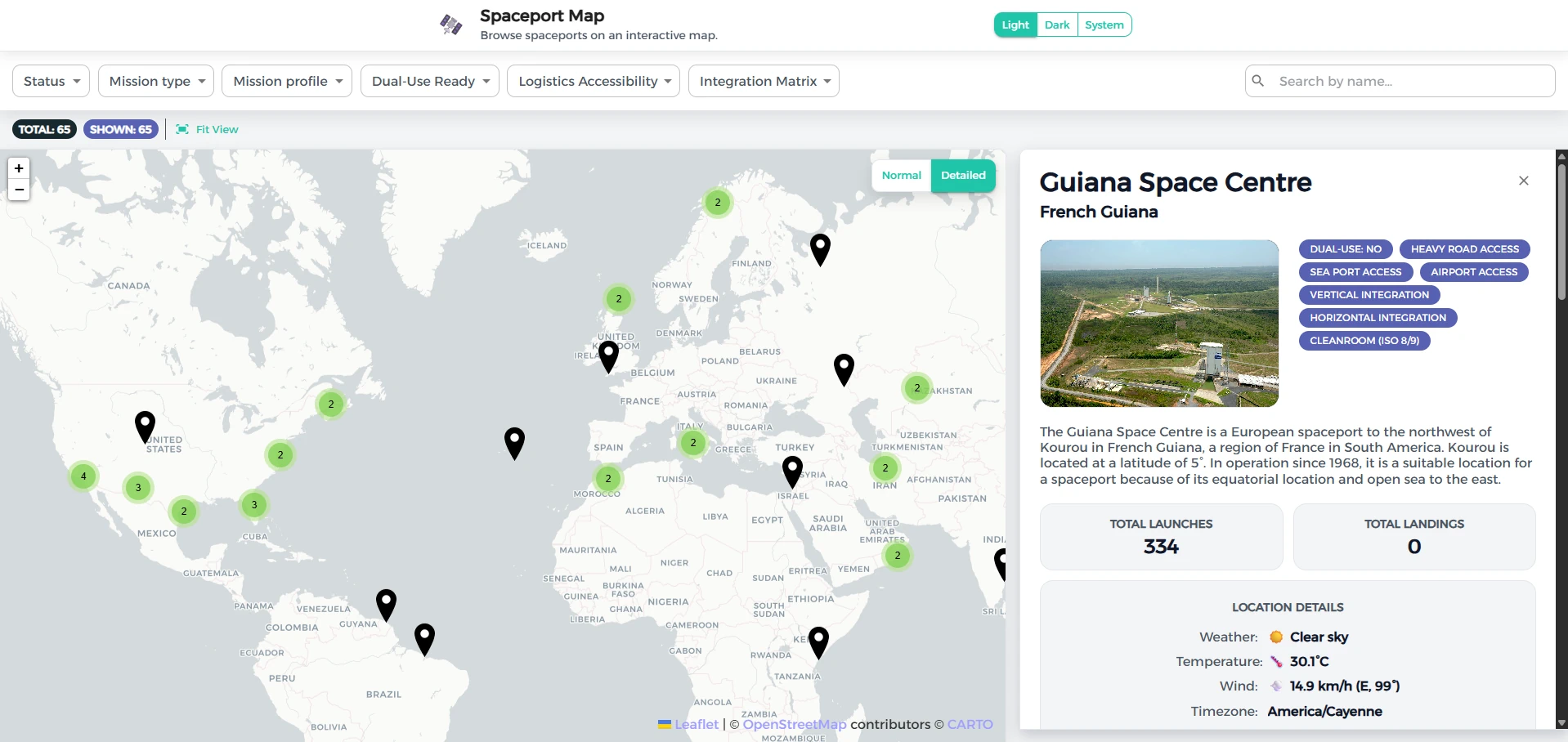
Our work with Europe’s Spaceport in French Guiana is one example. The software we build supports parts of launch operations that often remain invisible – payload preparation, access, campaign status, workflows, and the next decisions to be made. The same practical approach matters in energy and heavy industry, where good software helps teams manage complexity and turn plans into action.
Europe from different perspectives
The 18th European Economic Congress opened in Katowice with three giant screens behind the main stage showing maps of Europe from different angles: Europe as Europeans see it, Europe from the Pacific, and Europe from so far away that the continent appeared small and its borders were hard to see.
The opening keynote made a similar point: from inside Europe, things may still look relatively stable. From outside, Europe is harder to notice and define. It suggested the world shaped by clear rules has been replaced by something closer to managed chaos.
Europe, seen from our own perspective, looked very different from how it was seen in China, the United States, or the Global South.
It was a simple visual idea, but it captured the mood of the whole congress well. The old order hasn’t just been shaken – it is visibly shifting. Europe now has to navigate a landscape that is evolving faster than its own procedures, institutions, and industrial playbooks.
Geopolitical pressure is growing. Energy costs remain a major burden. Regulation is becoming heavier. Industrial leaders are asking whether Europe can still be a place where technologies are not only designed, but also manufactured, deployed, and scaled.
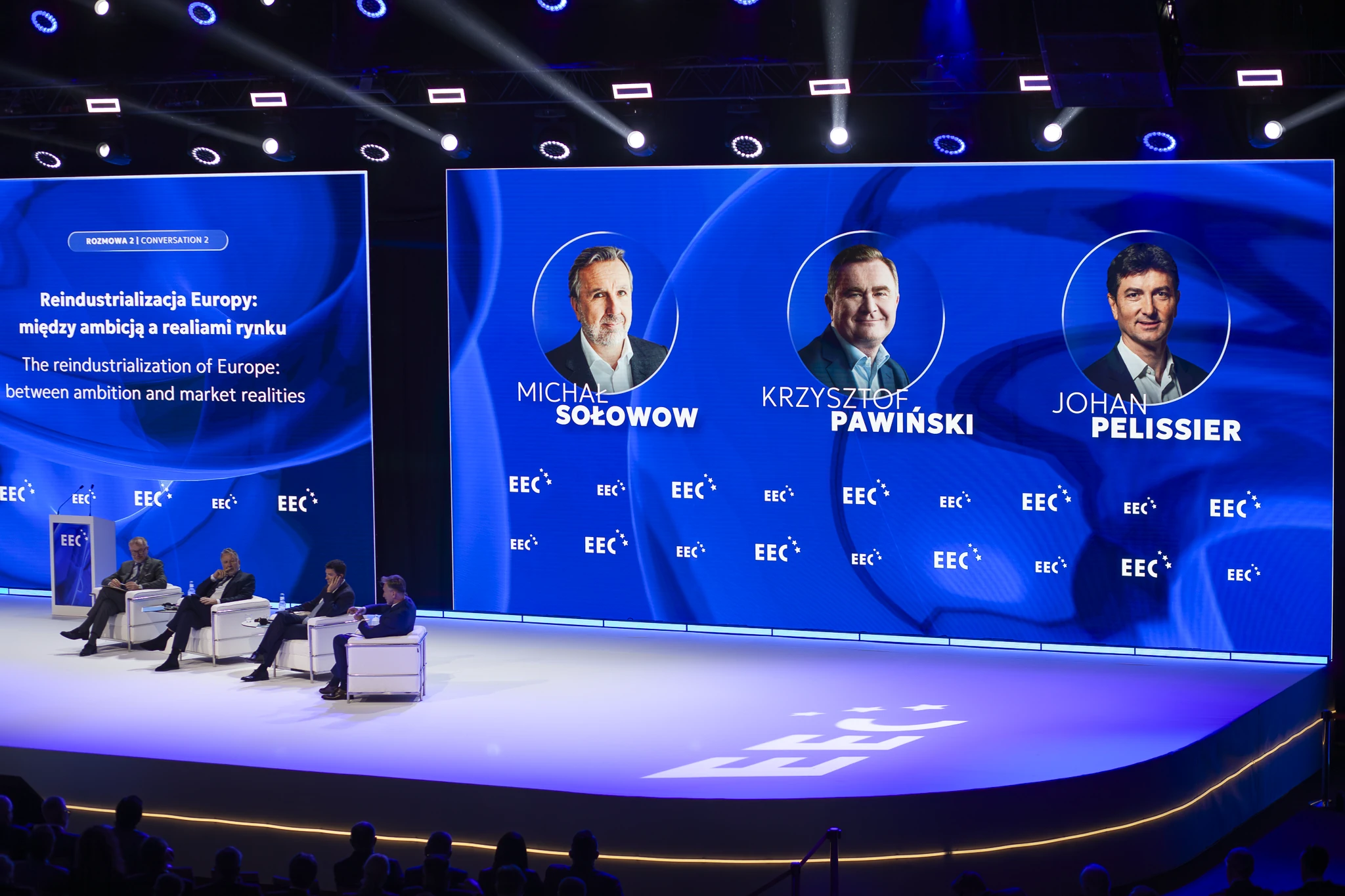 Opening discussion on Europe’s reindustrialisation and competitiveness, with Krzysztof Pawiński, Michał Sołowow and Johan Pelissier among the speakers
At the same time, AI, robotics, and automation are no longer abstract trends. They are beginning to affect real operations, real costs, and real competitiveness.
You could see this at the Congress. Humanoid robots were out on the exhibition floor, waving at people, jogging short loops, mirroring the gestures of whoever stood in front of them. Still closer to a demo than a working colleague, but enough to make the abstract talk about automation feel suddenly concrete.
Space is no longer a side topic
One of the strongest themes at EEC 2026 was the space industry. And this was not only about prestige, astronauts or inspiring stories. The message was broader: space is becoming part of strategic infrastructure.
Satellites quietly support energy, agriculture, logistics, telecommunications, and defense. Not everything would stop without them, but much of it would slow down, become less precise, and cost more.
Data from orbit helps us understand what is happening on Earth. More and more space technology is dual-use meaning the same satellite serves civilian customers and the military.
Poland has made significant progress in recent years. The country now has companies with real space capabilities, stronger engagement with ESA, the Ignis mission, and growing public interest in the sector. But the space panels also carried a more uncomfortable message: isolated success stories are not enough.
Poland needs a more coherent strategy, more stable financing, faster institutional decisions, and a stronger ecosystem. Not only a few excellent companies, but also a second and third layer of suppliers, integrators, subcontractors, research partners, and people able to turn technology into working systems.
The most charged moment came during one of the space panels, when Polish astronaut Sławosz Uznański-Wiśniewski joined the discussion from the audience in an exchange with Marta Wachowicz, President of POLSA. For a moment, this was no longer a typical conference conversation. The room clearly felt that the debate touched real pressure points: the pace of institutional action, the effectiveness of national programs, the use of public interest created by the Ignis mission, and whether Poland can turn a symbolic moment into long-term industrial momentum.
That kind of moment matters. It strips away the polite layer of conference language and shows what is really at stake. The Polish space sector does not need only more visibility. It needs execution.
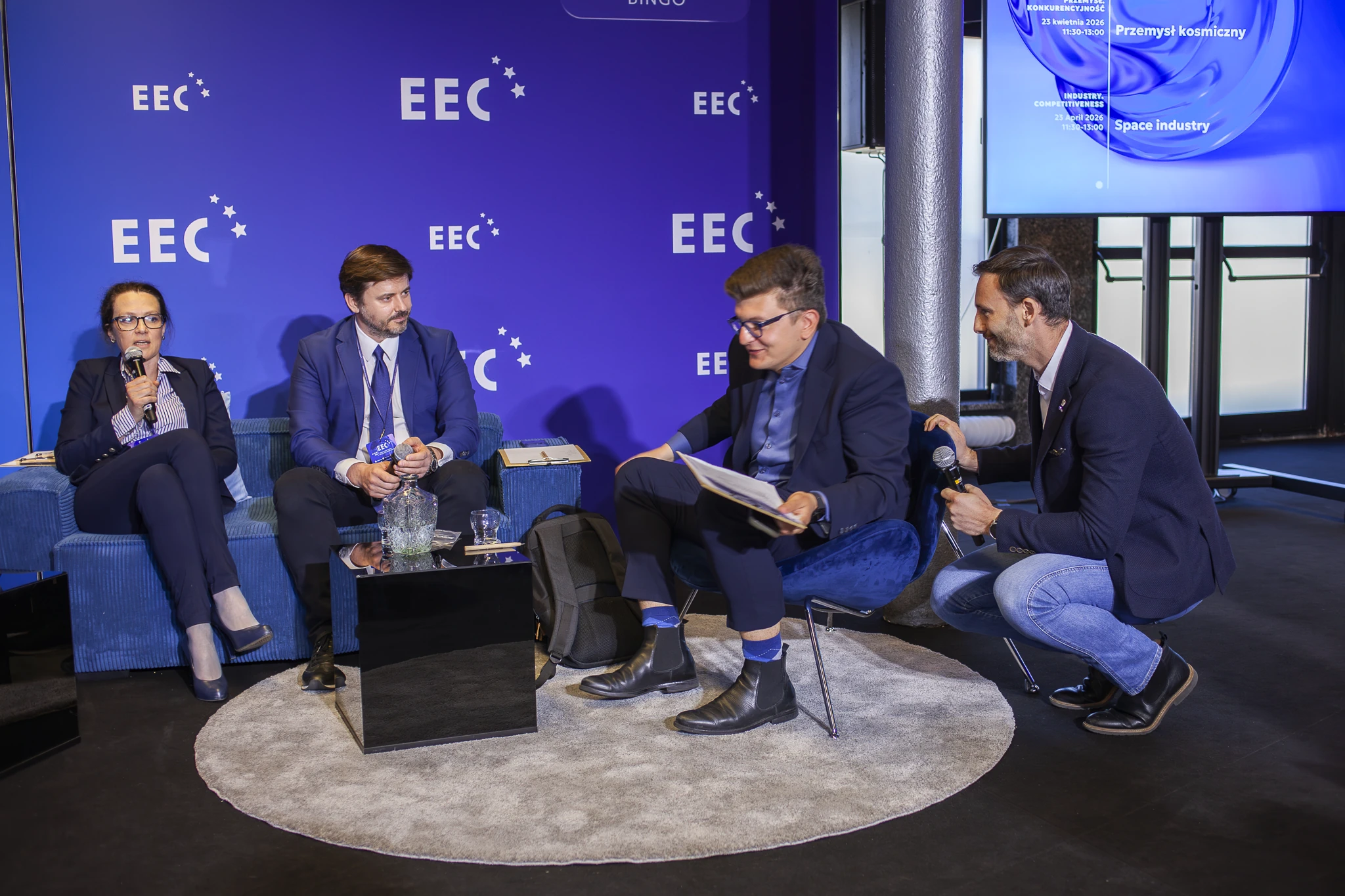 A lively, unscripted moment during the space industry panel: Polish ESA astronaut Sławosz Uznański-Wiśniewski joins the discussion in an exchange with Marta Wachowicz, President of the Polish Space Agency. Also pictured: Jacek Mandas of Creotech Instruments and Hubert Kijek of TVN24 BiS, the panel moderator
Education is part of the infrastructure
Education was another recurring theme. Space is not one discipline. It combines mechanics, electronics, optics, software, AI, materials science, telecommunications, cybersecurity, law, logistics, and mission management.
It is difficult to build such a sector if education continues to operate in silos. Missions like Ignis and Artemis, or the development of satellite technologies, could serve as powerful entry points into engineering, science, programming, and systems thinking. But that requires materials, projects, and language that connect major space events with what students actually learn at school.
On 23 April, the EEC panel on the aerospace industry put five speakers and ESA astronaut Sławosz Uznański-Wiśniewski around the same table: Airbus Polska, GoCosmic, AROBS, the Silesian University of Technology, and – representing science communication and education – Tomasz Rożek. The session’s listed themes ran from production demand and specialisation to innovation, skills, and Poland’s role in the European space value chain. The skills strand is what Rożek has been working on for years. His foundation Nauka.To Lubię released a full set of lesson scenarios tied to the Ignis mission – physics, maths, biology, Polish, history, and even PE – for primary schools.
In Silesia, this is no longer a theoretical debate. The region has put itself forward as a candidate for the new ESA centre in Poland, with the Górnośląsko-Zagłębiowska Metropolia presenting its “GZM2026: Ready to Launch” report as the case for hosting it. Where the centre eventually lands is one question. A more useful one is what actually gets built around it: which faculties in Gliwice or Katowice rewrite their programmes, which local companies start bidding for ESA subcontracts, and whether the engineers trained here have a reason to stay in Poland rather than take the next offer from Toulouse or Munich.
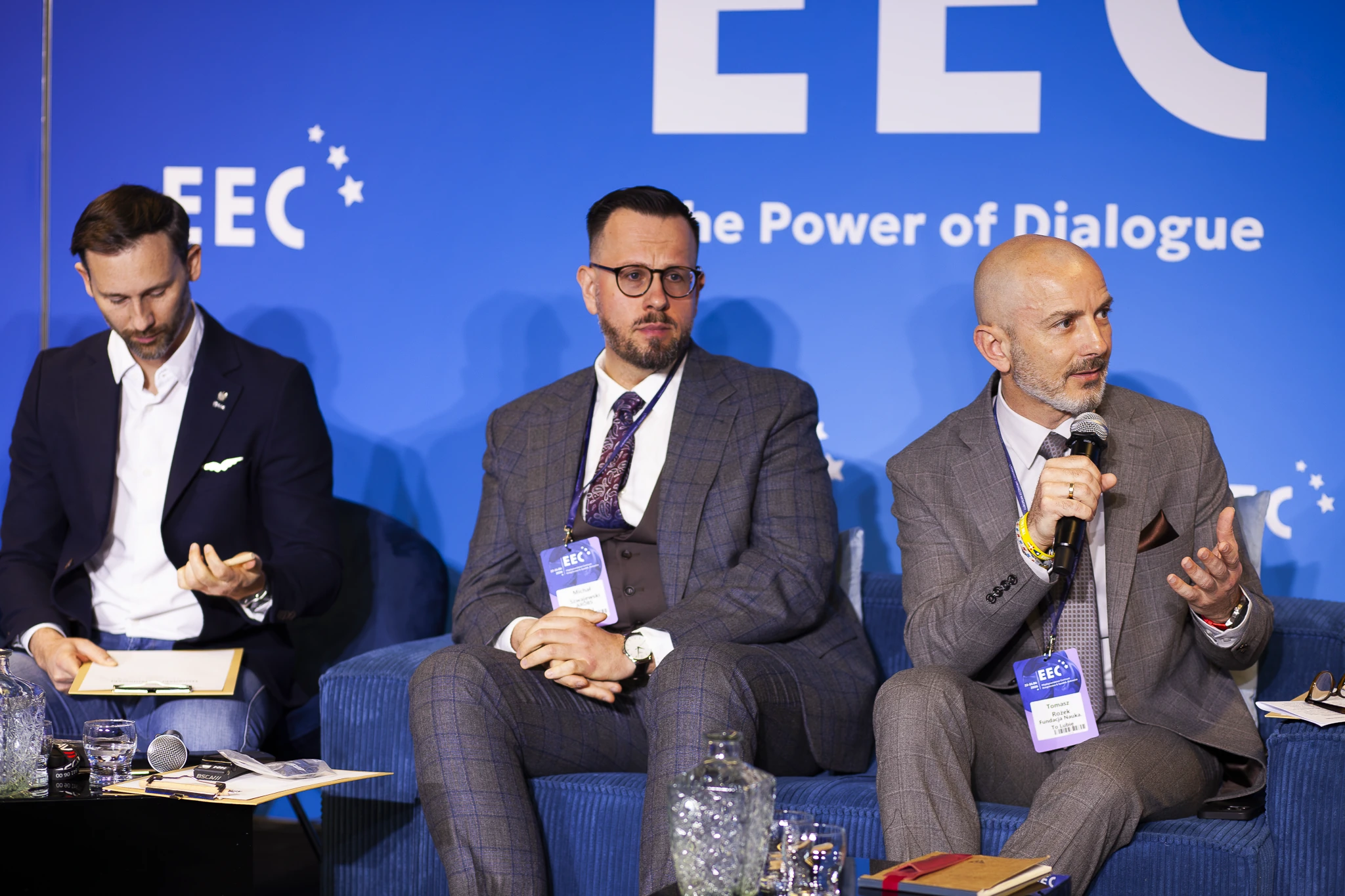 Tomasz Rożek speaking during the space industry panel, alongside Sławosz Uznański-Wiśniewski and Michał Szwajewski. His remarks on education, public engagement and the long-term talent pipeline became an important part of the discussion about Poland’s space sector
One of the most interesting informal conversations for us was also the meeting with students representing Silesian Aerospace Technologies from the Silesian University of Technology.
In conversations like this, you can see the energy that the sector needs. The question is whether the economy can use it well: through internships, joint projects, first deployments, contact with industry, and real entry paths for young engineers.
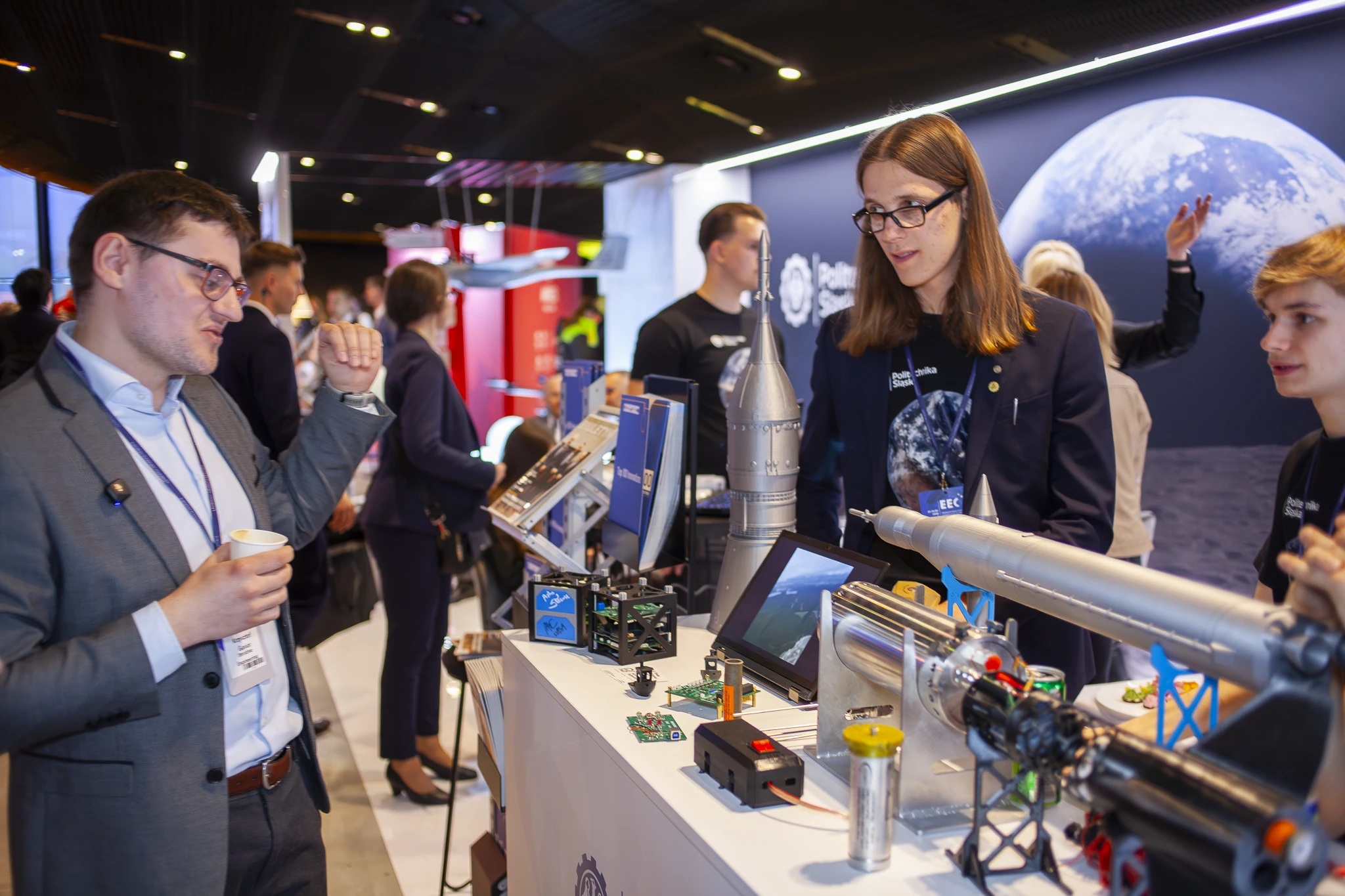 Conversation with students from Silesian Aerospace Technologies at the Silesian University of Technology – a reminder that the future of the space sector will depend not only on institutions and companies, but also on the next generation of engineers
For Silesia, this is especially important. A region historically associated with heavy industry and mining now has a chance to use its engineering DNA in new areas: space, automation, data, energy, and advanced software.
Polish-French cooperation: from diplomacy to industrial execution
Another important theme of the congress was Polish-French cooperation. At EEC 2026, this did not feel like a diplomatic side topic. It was part of a larger question: how can Europe rebuild its industrial strength and strategic autonomy?
Poland and France bring different, but complementary strengths. France has deep capabilities in aerospace, space, defence, nuclear energy, infrastructure, and industry. Poland has a growing market, strong engineering talent, a strategic location, transformation experience, and an urgent need to modernize its energy and industrial base.
In space and defence, this cooperation can be particularly important. Airbus, Safran, MBDA, EDF, and TotalEnergies are not just names on conference slides. They represent real industrial capabilities – from space and defence systems, through nuclear energy, to fuels, biogas, renewables, and infrastructure transformation.
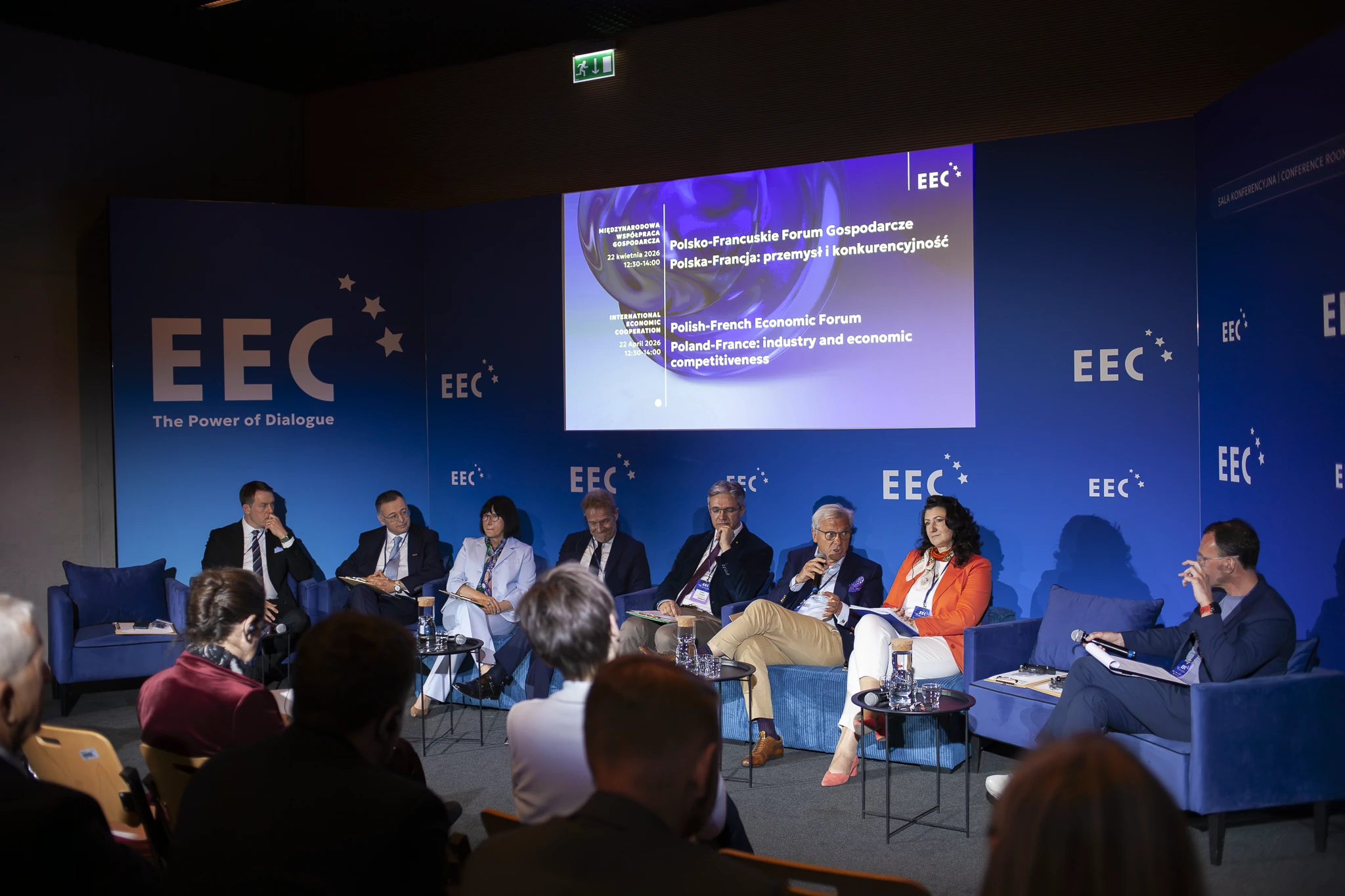 Polish-French economic cooperation panel at EEC 2026. The discussion placed industrial partnerships, energy, defence, and European strategic autonomy in a broader business context
For Poland, the key question is what role it wants to play in these value chains. Will it remain mainly a supplier of components and talent, or will it gradually move toward greater responsibility for systems, integration, and final solutions?
This question goes far beyond space. In energy, Polish-French cooperation touches nuclear power, renewables, biogas, and storage. In oil & gas and petrochemicals, it reminds us that the energy transition is not as simple as switching off the old world. Europe still needs stable supply chains, raw materials, infrastructure, and production capacity.
AI, robots, and the pressure to automate
EEC 2026 also showed that AI and robotics are no longer a separate “technology track.” They are becoming an answer to the same problems discussed in energy, industry, and security: shortages of skilled workers, rising costs, complex processes, and pressure to move faster.
The robots present at the congress, including humanoid robots, made an impression. Not because they will replace people everywhere tomorrow. Rather, they show the direction of travel. Automation is no longer just a production line or a simple script. Increasingly, it means combining mechanics, sensors, AI, data, and software.
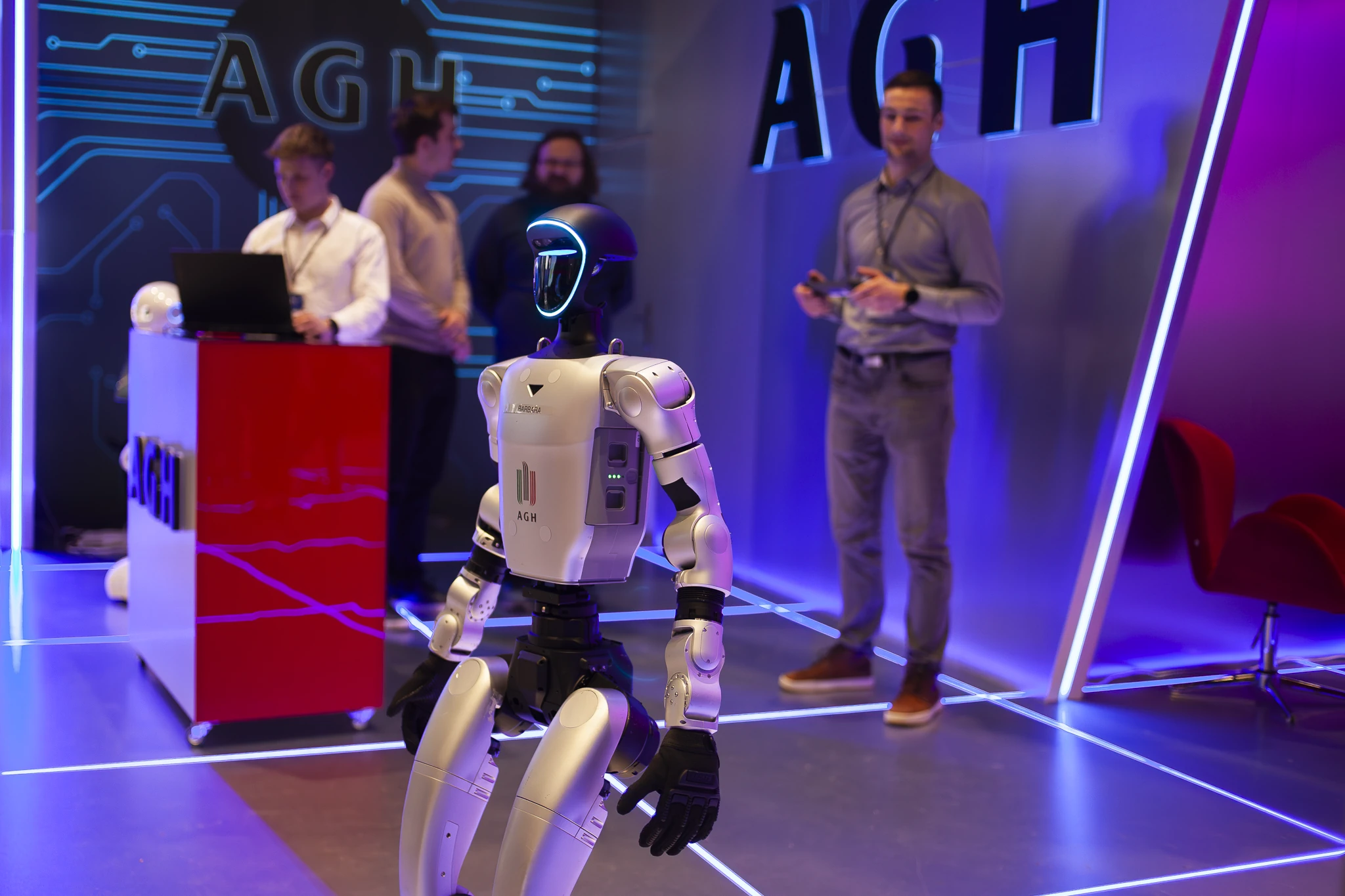 A humanoid robot at the AGH University of Krakow stands at EEC 2026, drawing both fascination and unease
For Europe, this matters. With high energy costs, strong regulation, and demographic pressure, competitiveness cannot be based only on human effort and manual coordination. Europe needs higher productivity, faster reaction times, and better control over complex processes.
And this leads to a topic that is especially close to us.
Software is becoming industrial infrastructure
Many debates at the congress can be reduced to one sentence: Europe does not lack ambition. It lacks deployment speed.
Regulations are becoming more complex. Energy systems are harder to manage. Supply chains are more fragile. Space projects require coordination between teams, facilities, procedures, suppliers, safety rules, and access controls. Defence and dual-use technologies require control over data. The energy transition requires not only infrastructure, but also intelligent management of that infrastructure.
This is where software stops being an add-on. It becomes the operational layer of industry.
Well-designed systems can automate processes, organize data, shorten decision-making, support compliance, and reduce operational risk. In energy, they help manage complexity. In space, they help organize campaigns, payload preparations, workflows, user roles, and access control. In oil & gas and industry, they help move from reactive work to data-driven processes.
In each of these sectors, the same pattern appears: complexity grows faster than the traditional ways of managing it.
What all of that means for Iterative Engineering
The conversations at EEC 2026 were not detached from our day-to-day work. They touched exactly the areas where Iterative Engineering has been building experience: space operations, industrial software, energy, oil & gas, and complex process management.
In the space sector, our work with Europe’s Spaceport in French Guiana has demonstrated the significant operational value that can be derived from software that supports real procedures, rather than just reporting. Payload preparations, campaign coordination, roles, access, workflows, and operational visibility are not secondary details. They are part of how a spaceport functions.
That is why the discussions about Poland’s space ecosystem, institutional speed, talent, and international cooperation felt especially relevant. If Europe wants to strengthen its space capabilities, it will need not only rockets, satellites, and ambitious programs. It will also need the digital systems that make complex operations repeatable, auditable, and scalable.
The same applies to energy and oil & gas. The transition will not be managed by infrastructure alone. It will require systems that help companies coordinate assets, data, compliance, maintenance, risk, and decision-making across increasingly complex environments.
This is the area where we believe Iterative Engineering can contribute: by building and integrating software that helps strategic industries move from discussion to execution.
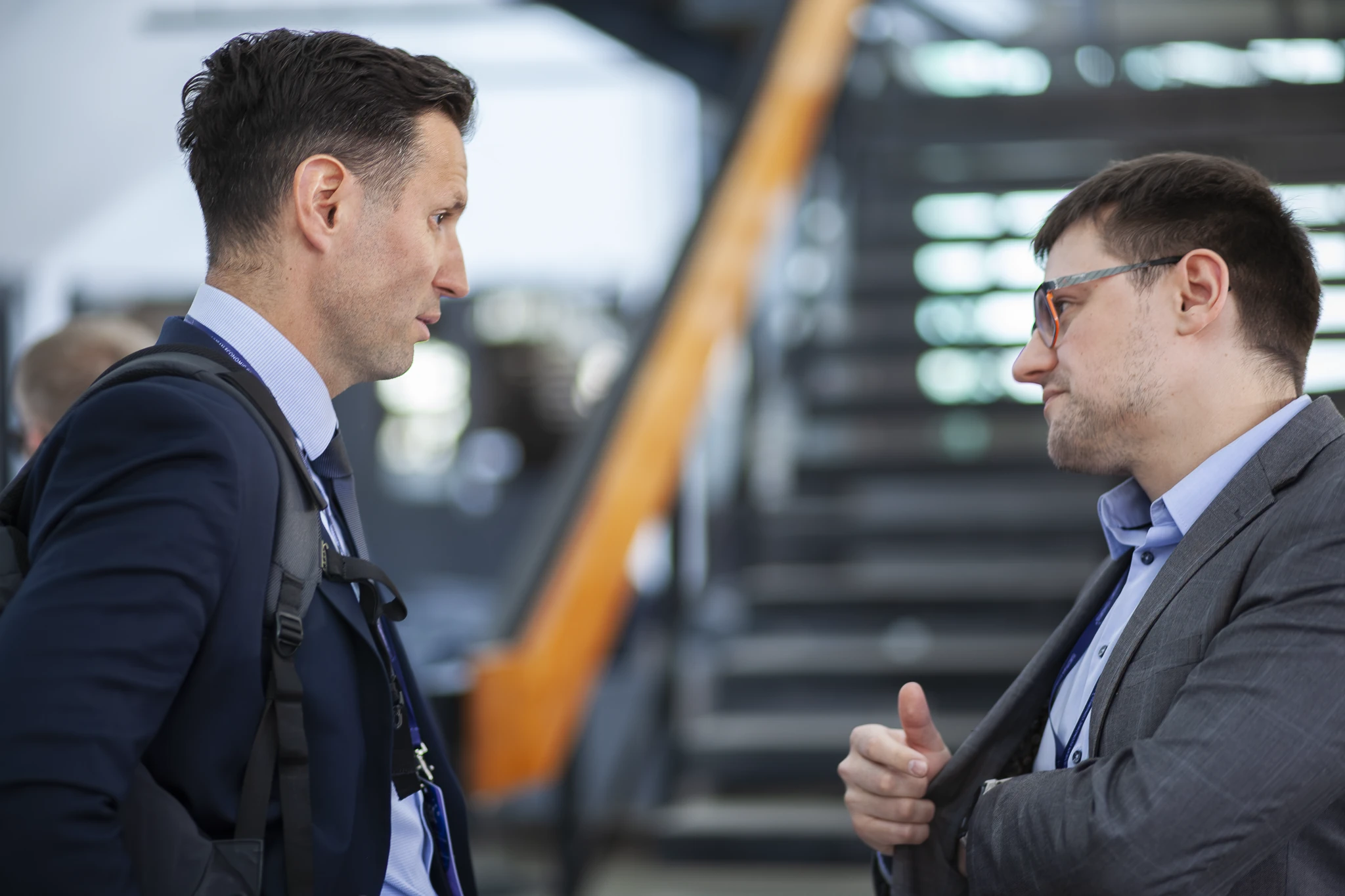 Krzysztof Gąsior, CEO of Iterative Engineering, on the right, in conversation with Michał Zachara, CEO of KP Labs, during EEC 2026
The congress also confirmed the importance of staying close to the ecosystem. Conversations in the corridors – including meetings with representatives of Airbus Poland, KP Labs, and students from Silesian Aerospace Technologies – were a reminder that industrial capability is built through networks: companies, institutions, universities, and people who understand both technology and operations.
For us, this is one of the practical outcomes of EEC 2026. Not only a list of observations, but a clearer sense of where our work fits into Europe’s broader industrial challenge.
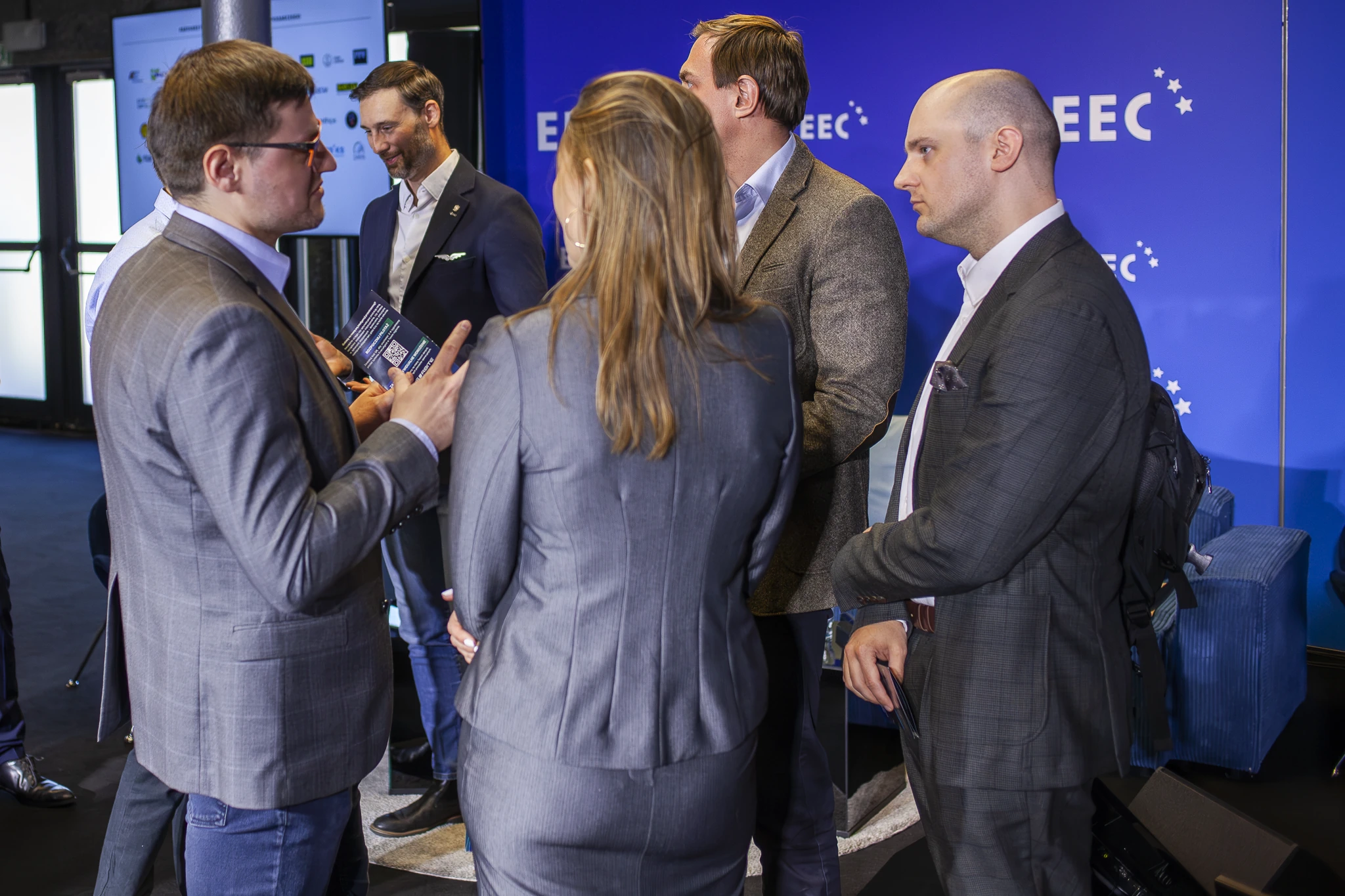 Conversations continued after the space industry panels, with participants from business, science, and the space ecosystem exchanging views beyond the formal agenda
Hero image: Opening session of the European Economic Congress 2026 in Katowice. The world maps shown on the main screens set the tone for one of the congress’s central themes: Europe’s changing role in a rapidly shifting global order
All photos by Tomasz Pac for Iterative Engineering.
- Europe from different perspectives
- Space is no longer a side topic
- Education is part of the infrastructure
- Polish-French cooperation: from diplomacy to industrial execution
- AI, robots, and the pressure to automate
- Software is becoming industrial infrastructure
- What all of that means for Iterative Engineering