ESA Industry Space Days 2026: Key Takeaways from Noordwijk
ESA Industry Space Days 2026 (ISD), held on 16–17 September at ESA’s European Space Research and Technology Centre (ESTEC) in Noordwijk, the Netherlands, drew a record 3,100 participants from around 1,500 companies. The event showed a European space industry that is attracting new players and pushing for technological independence, while facing tougher competition and persistent barriers to market entry.
ISD 2026 was the 12th edition of the event. According to ESA’s official summary of Industry Space Days 2026, it featured approximately 240 exhibitors and nearly 10,000 business meetings.
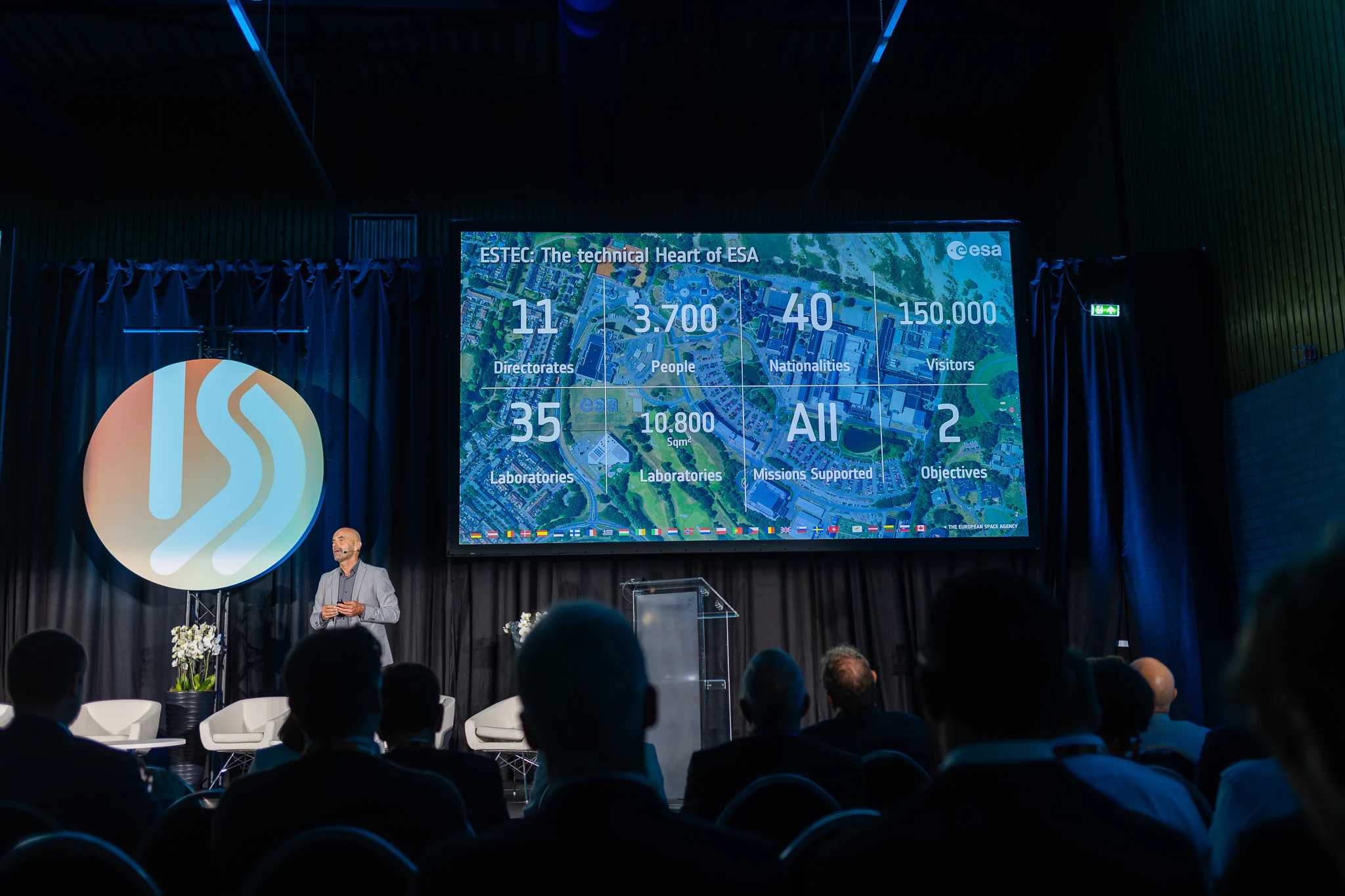 Dietmar Pilz, ESA Director of Technology, Engineering and Quality, presenting ESTEC’s engineering and testing capabilities at ESA Industry Space Days 2026 in Noordwijk.
Photo: Tomasz Pac / Iterative Engineering.
The Iterative Engineering team attended selected conference sessions, held B2B meetings, and spoke with people from across the European space industry. Our main interest was how software engineering and experience from other industrial sectors can support space operations as they grow more complex.
Here are six observations we brought back from Noordwijk.
Record attendance brings opportunities, but also stronger competition
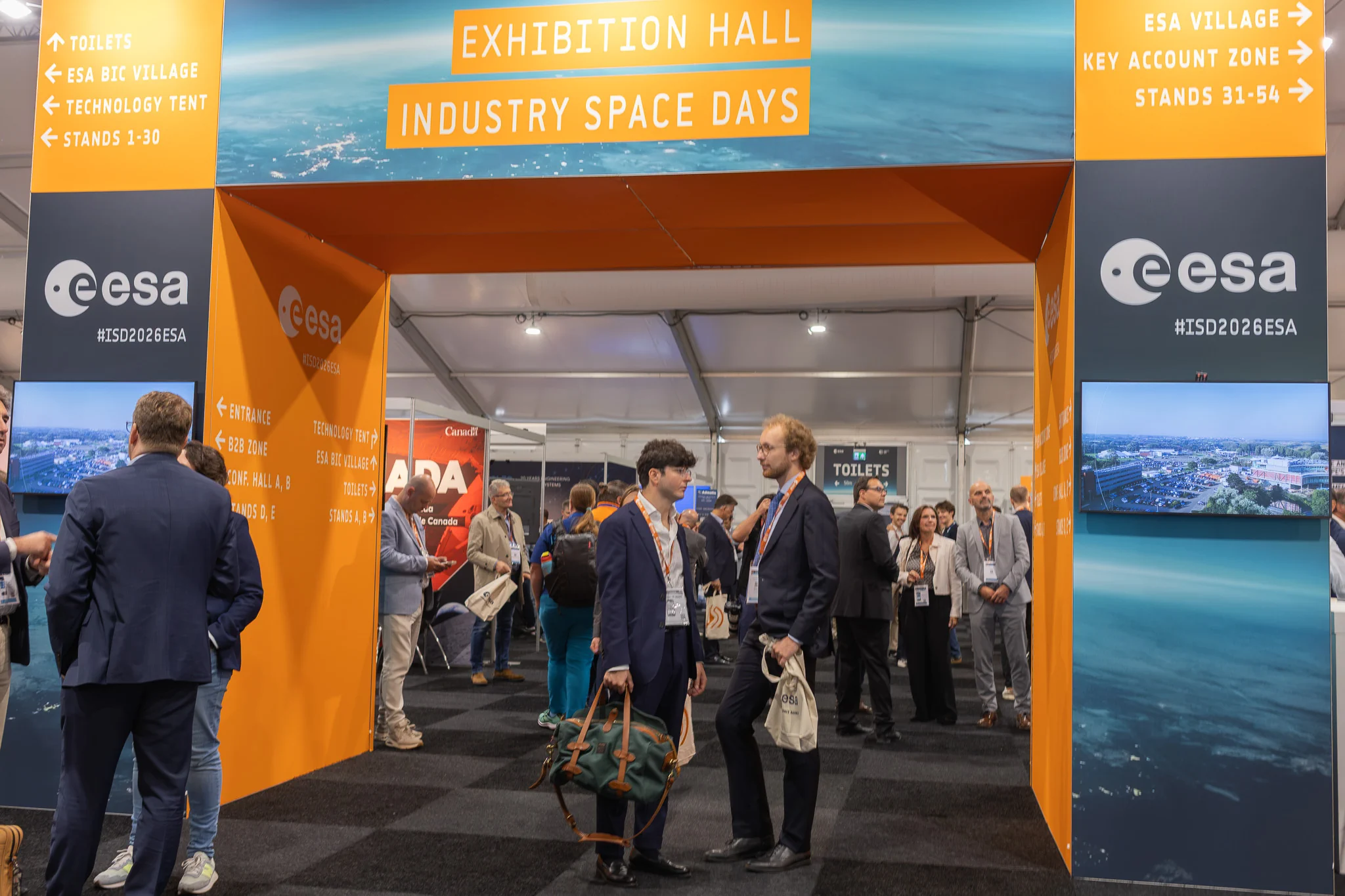 The exhibition hall at ESA Industry Space Days 2026 in Noordwijk, where participants gathered for presentations, networking and business meetings.
Photo: Tomasz Pac / Iterative Engineering.
Record attendance at ISD 2026 means more opportunities for collaboration in Europe’s space sector, and more companies competing for the same contracts.
The exhibition areas were crowded for both days, and many conversations carried on well after the scheduled B2B slots had ended. Established space companies and large system integrators shared the halls with startups and small technology suppliers, as well as firms from other sectors looking for new markets.
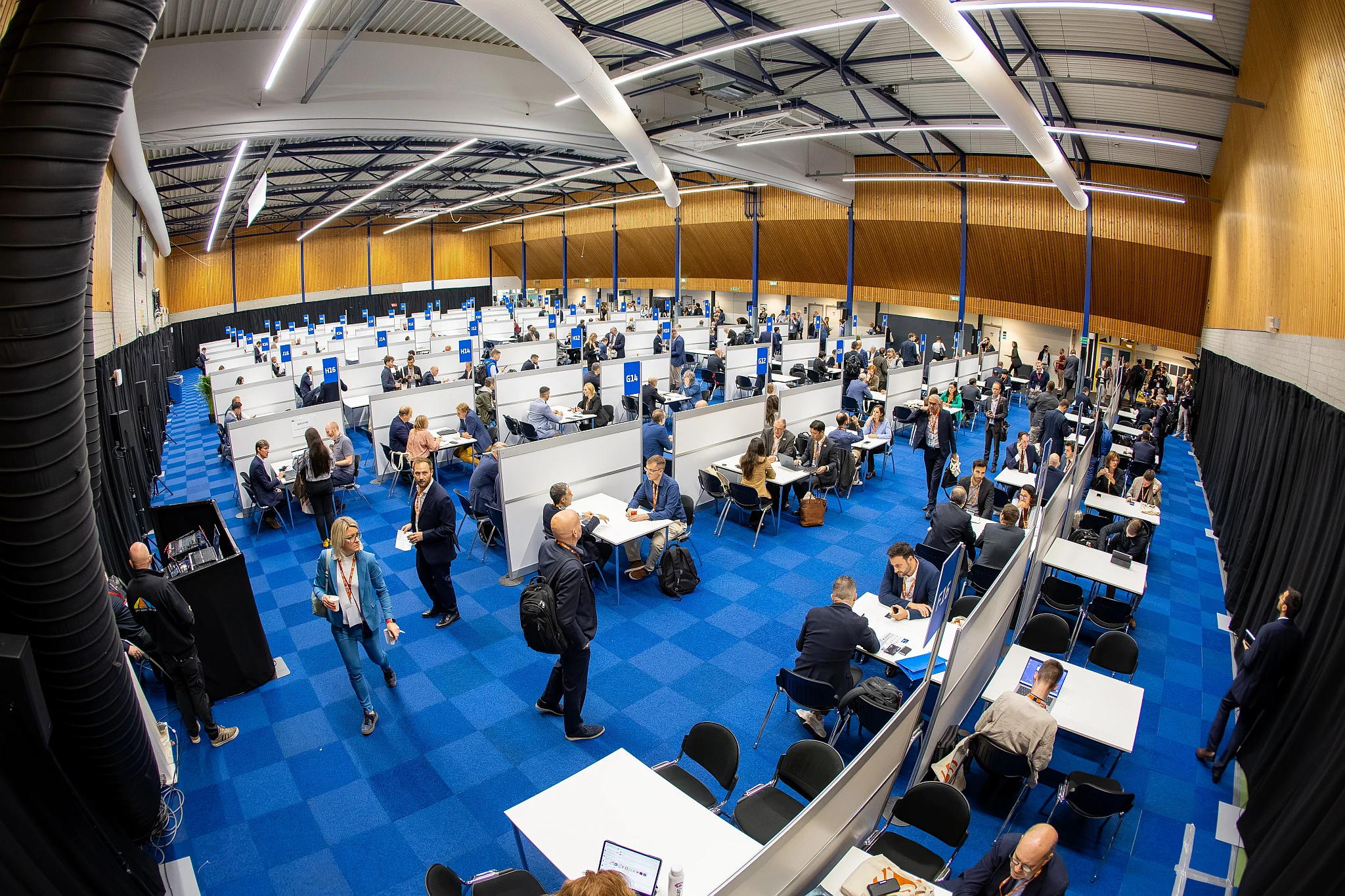 B2B meetings at ESA Industry Space Days 2026 in Noordwijk. Nearly 10,000 business meetings took place during the two-day event.
Photo: Benjamin Arthur Photography
Source: ESA Industry Space Days 2026 official photo gallery.
For the industry, this mix is good news. Newcomers bring additional expertise and technology, and with them new chances to collaborate. The downside is that technical capability alone rarely sets anyone apart.
For a company like Iterative Engineering, winning work depends on understanding the customer’s operational requirements and the constraints of their industry, and then delivering software that works reliably.
A larger market may well create more demand for digital solutions. It also makes the choice of specialisation more important.
Europe wants greater technological autonomy without isolation
Technological sovereignty was one of the most frequent themes at ISD 2026, with the emphasis on building independent European capabilities while keeping international partnerships in place.
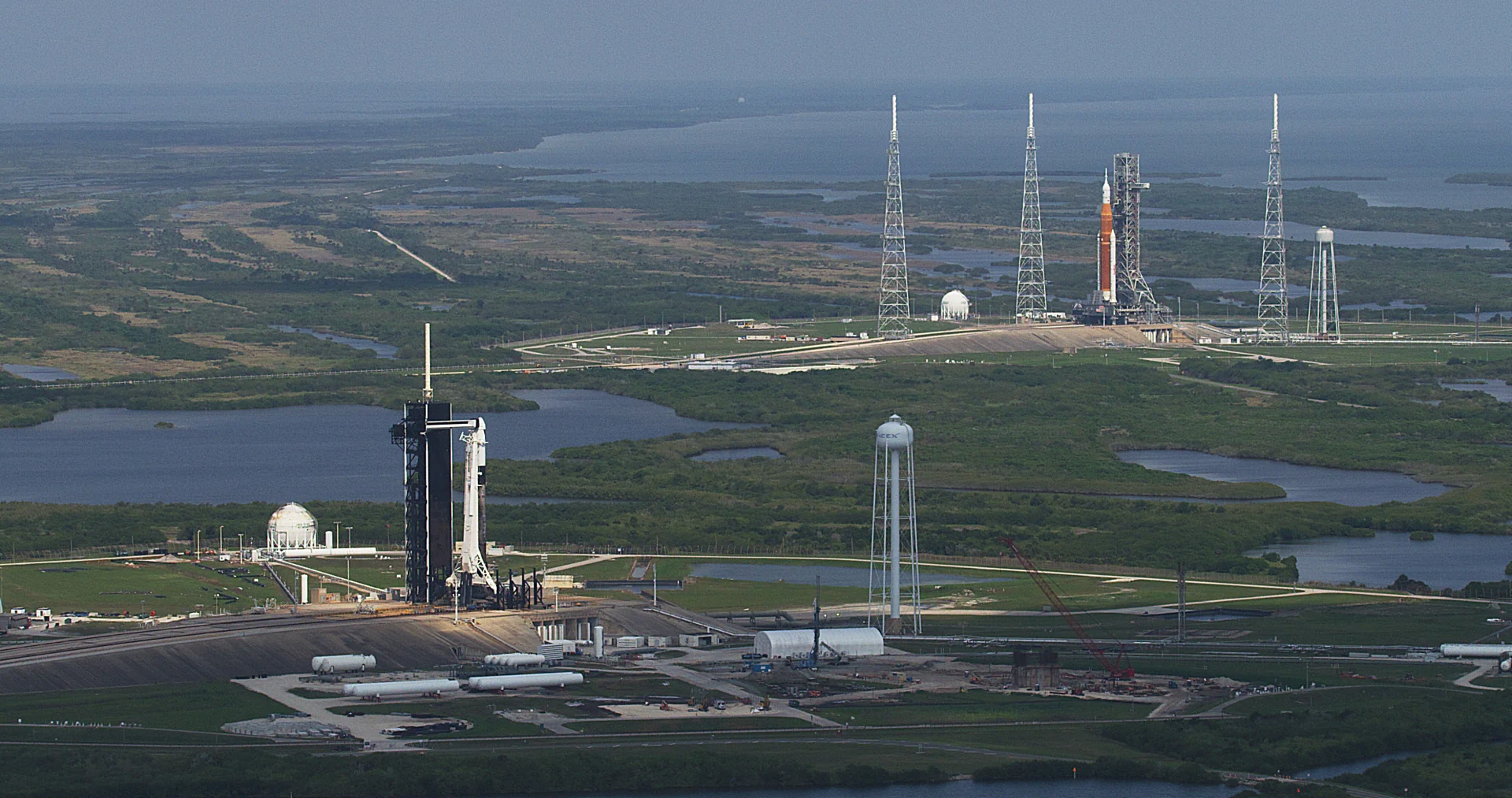
Europe has strong engineering and research capabilities and a solid industrial base. Growing competition from the United States and China is pushing it to build independent capabilities and to bring new technologies into operational use faster. That applies to launch infrastructure and satellite systems as much as to critical components and the software needed to run them. We explored the US approach in our earlier article, How the United States built a launch system, not a single spaceport.
The ADAMP model displayed at ISD offered a concrete example of European technology development beyond the continent’s largest space industry centres. The Romanian project focuses on a modular platform designed to demonstrate reusable vertical landing capabilities.
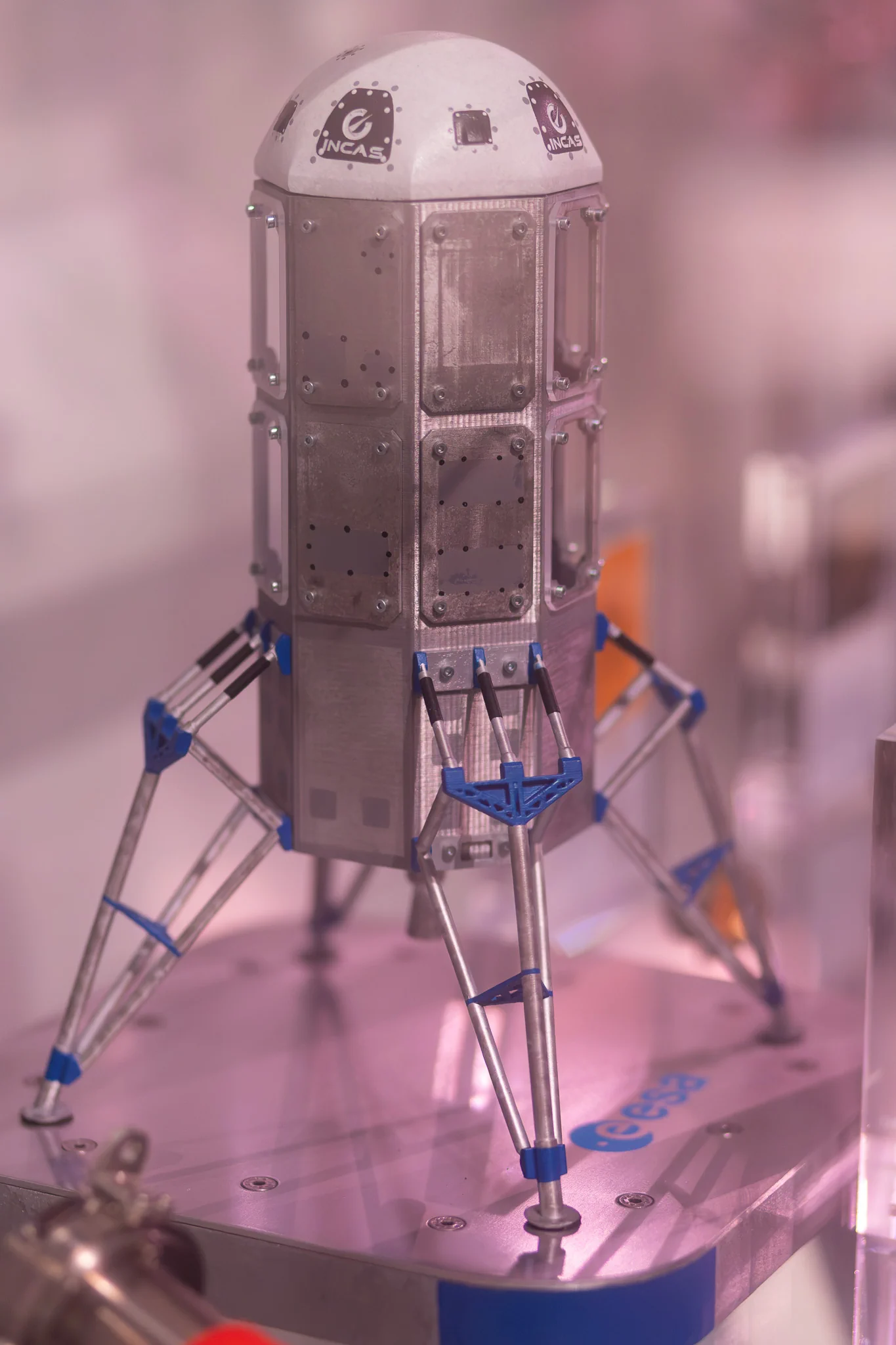 ADAMP, a modular vertical-landing technology demonstrator developed in Romania with ESA support under the GSTP programme. Model displayed at ESA Industry Space Days 2026 in Noordwijk.
Photo: Tomasz Pac / Iterative Engineering.
International partners were still very much part of the picture. The Canadian delegation was sizeable, and its members were actively looking for European partners. Canada is ESA’s only non-European Cooperating State and has had a formal cooperation agreement with the Agency since 1979. Its presence in Noordwijk showed how independence and cooperation can support each other.
For Europe, the practical test is whether it can build and run key capabilities without relying too heavily on outside suppliers. Software and the systems that integrate operational data are part of that capability too.
Administrative complexity remains a barrier to faster development
Administrative complexity is still one of the main barriers to entering the European space market, particularly for smaller companies. The topic came up in several of our conversations at ISD.
Strict technical requirements make sense in an industry where reliability and safety are critical. Complex procurement procedures and long decision cycles are a different matter. Combined with heavy documentation requirements, they make market entry hard for anyone without an established position.
ESA recognises the problem. At ISD, the Agency presented initiatives meant to make technology development opportunities easier to access, including streamlined processes that should cut paperwork and shorten the time from submitting an idea to signing a contract.
The changes point in the right direction, and their practical effect will become clearer over time.
Smaller software companies often deal with this environment by working with more established industrial partners. Larger organisations bring market experience and existing relationships, while smaller specialists contribute focused technical expertise.
Partnerships of this kind make commercial sense, and they also offer a practical way around some of the structural barriers in a demanding market.
Expertise from other industries is finding its way into space
Companies from energy, oil and gas, industrial automation and related fields are increasingly looking for work in space, because many of their operational problems resemble those of space operations. ISD 2026 drew a noticeable number of such firms.
The link may not be obvious at first. Complex infrastructure has to be monitored, and information has to move between different systems. When several organisations share a process, they need coordination and reliable, traceable data.
Industrial software companies have been working on these problems for years.
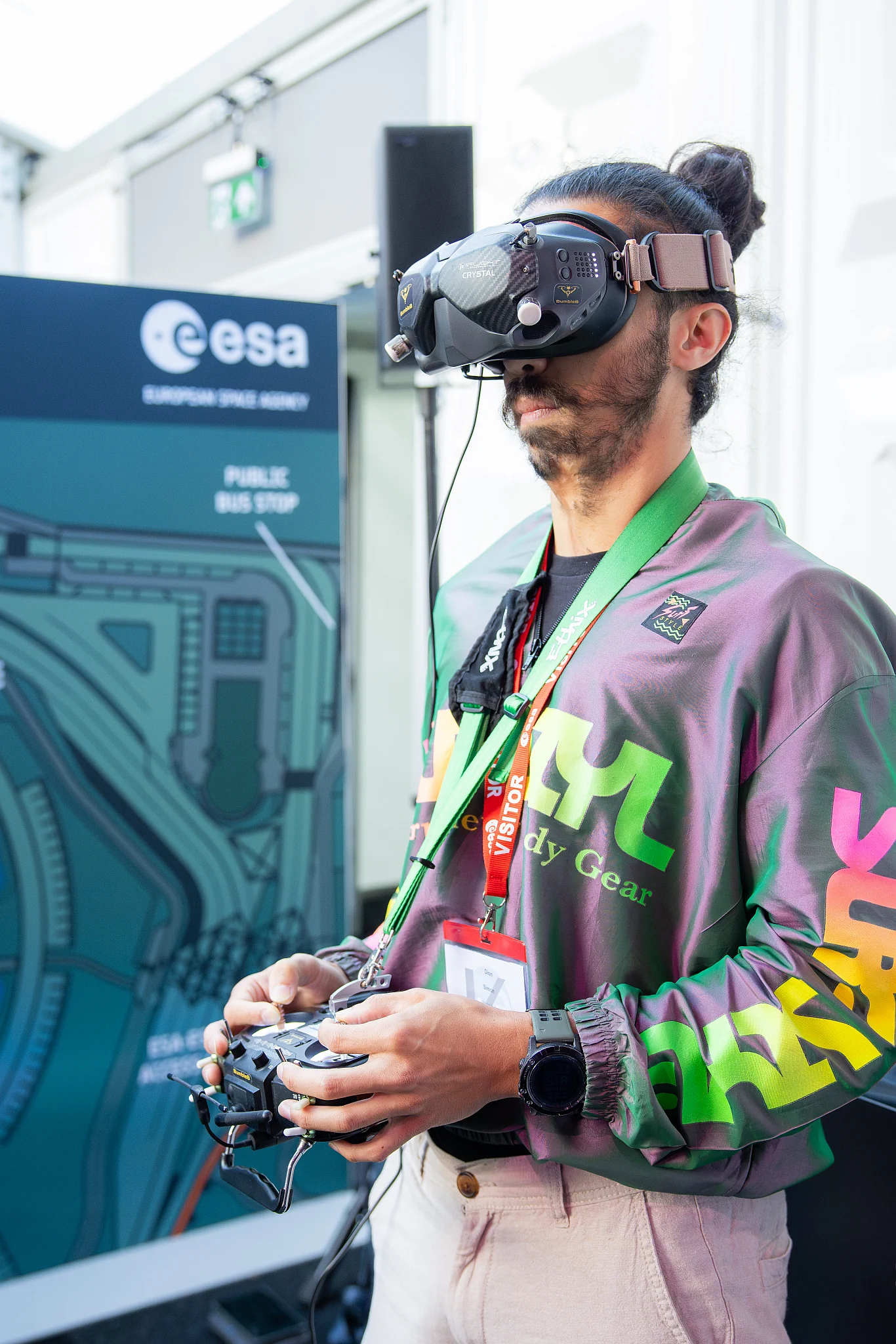 A participant testing an immersive technology demonstrator at ESA Industry Space Days 2026 in Noordwijk.
Photo: Benjamin Arthur Photography
Source: ESA Industry Space Days 2026 official photo gallery.
Transferring that experience means adapting it. Space operations have their own safety requirements and working procedures, and a supplier has to understand them before proposing a solution.
For Iterative Engineering, this transition is already part of our history. Our work on industrial data integration, particularly in oil and gas, laid the foundation for our projects supporting space launch operations.
Experience from other industries can be valuable in space, as long as it is adapted to what the sector actually needs.
Ground operations software is a specialised market, with new needs emerging
Ground operations software, which supports spaceports, launch campaigns and related infrastructure, is a specialised market led by experienced suppliers, but the growth of New Space companies may create demand that is not yet fully visible.
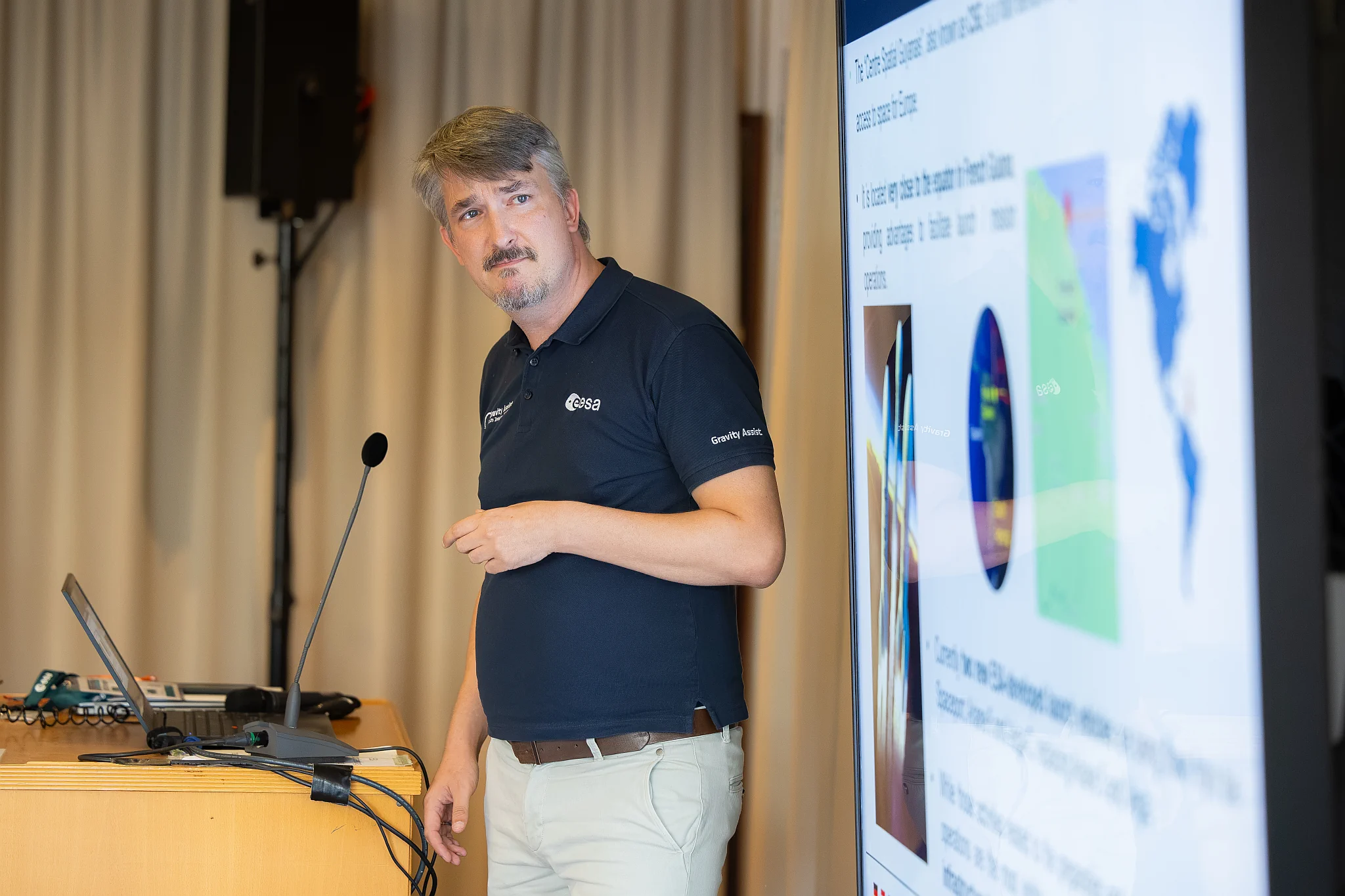 An ESA Industrial Policy Officer presenting opportunities for industry at Europe’s Spaceport during ESA Industry Space Days 2026 in Noordwijk.
Photo: Benjamin Arthur Photography
Source: ESA Industry Space Days 2026 official photo gallery.
Established suppliers have years of experience behind them, and a newcomer needs more than general software development skills to earn trust.
New Space companies, mostly privately funded firms developing commercial space products, understandably focus on building and testing their technology and on raising funds in their early stages. With small teams and limited operations, they can often get by with simple tools and direct communication.
That changes as they grow.
More missions, customers, and staff bring more operational dependencies, along with new requirements for planning, process management, system integration, traceability, and automation. Problems that were manageable during development can become serious obstacles once operations become routine.
Not every company can see these needs coming. Some only become apparent when existing methods can no longer keep up with the scale or complexity of the business, and that is the point at which specialised software engineering can help.
Our experience with LaunchReady, a system supporting payload preparation processes at Europe’s Spaceport in Kourou, shows this approach in practice. The project started from specific operational problems – handling service requests and coordinating work during launch campaigns – and the software was built to address them.
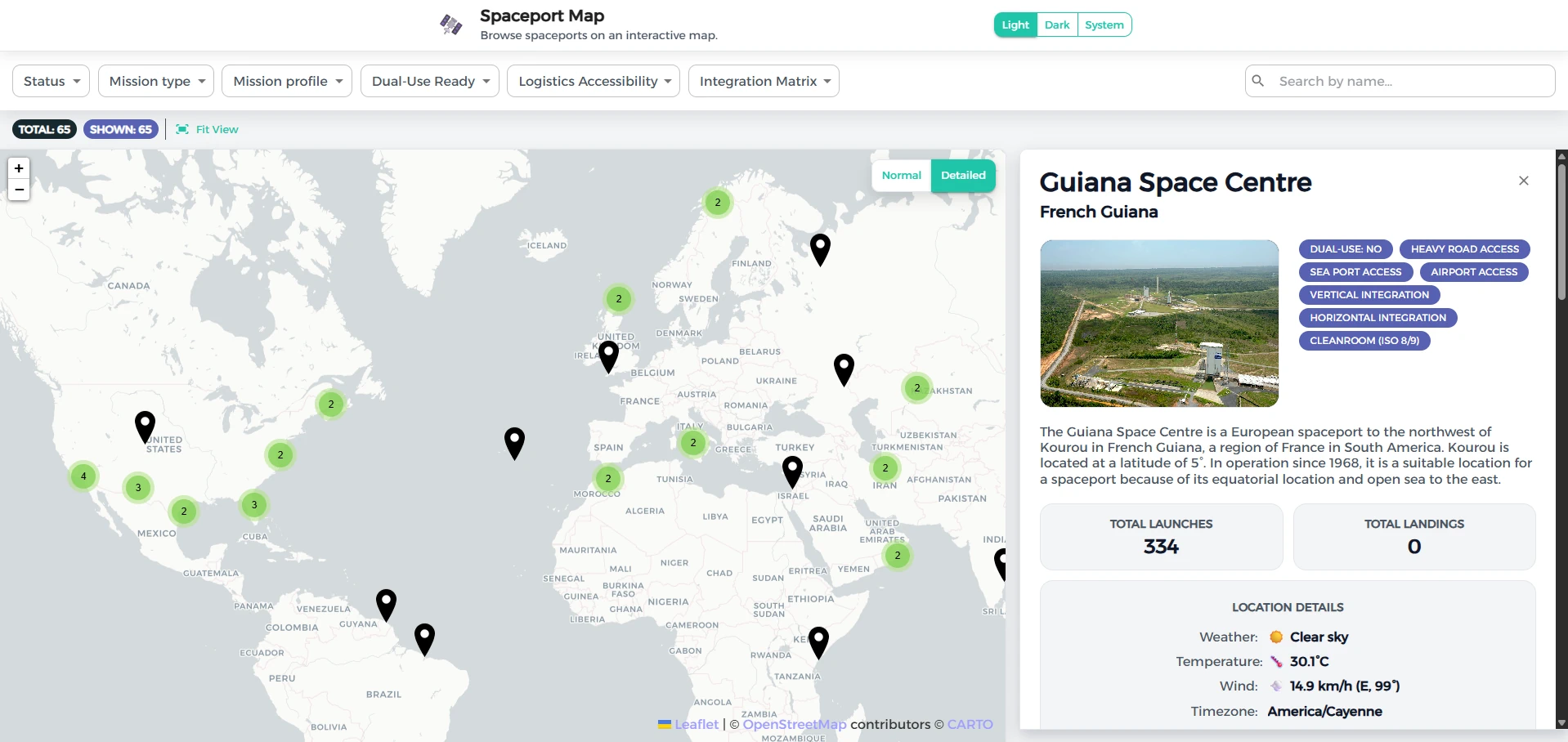
We discussed this experience in more detail at CSG Industry Days in Paris, an event dedicated to the Guiana Space Centre (CSG) in French Guiana, as described in our article From Industrial Data to Space Launch Operations. For a wider view of launch sites worldwide, our Spaceports App brings global launch infrastructure data into one interactive map.
In our view, effective digitalisation starts with understanding how people and systems work together. From there, the job is to find where processes lose efficiency and decide which problems software can realistically solve.
Cybersecurity and VLEO are introducing new technical challenges
Sessions on cybersecurity and Very Low Earth Orbit (VLEO) at ISD 2026 showed that new space technologies raise the requirements for reliability and for the way systems are integrated and managed.
The cybersecurity presentations covered a wide range of work, including Trusted Platform Modules, Secure Boot, post-quantum cryptography, intelligent jamming detection and machine learning for threat and vulnerability management.
Taken together, they showed how demanding it has become to protect space systems. Securing data links is only part of the task. Onboard hardware, software integrity and authentication matter just as much, as does the ability to respond to new threats.
The VLEO sessions focused on technologies that allow satellites to operate at much lower altitudes, including propulsion systems, low-latency communications and persistent video observation.
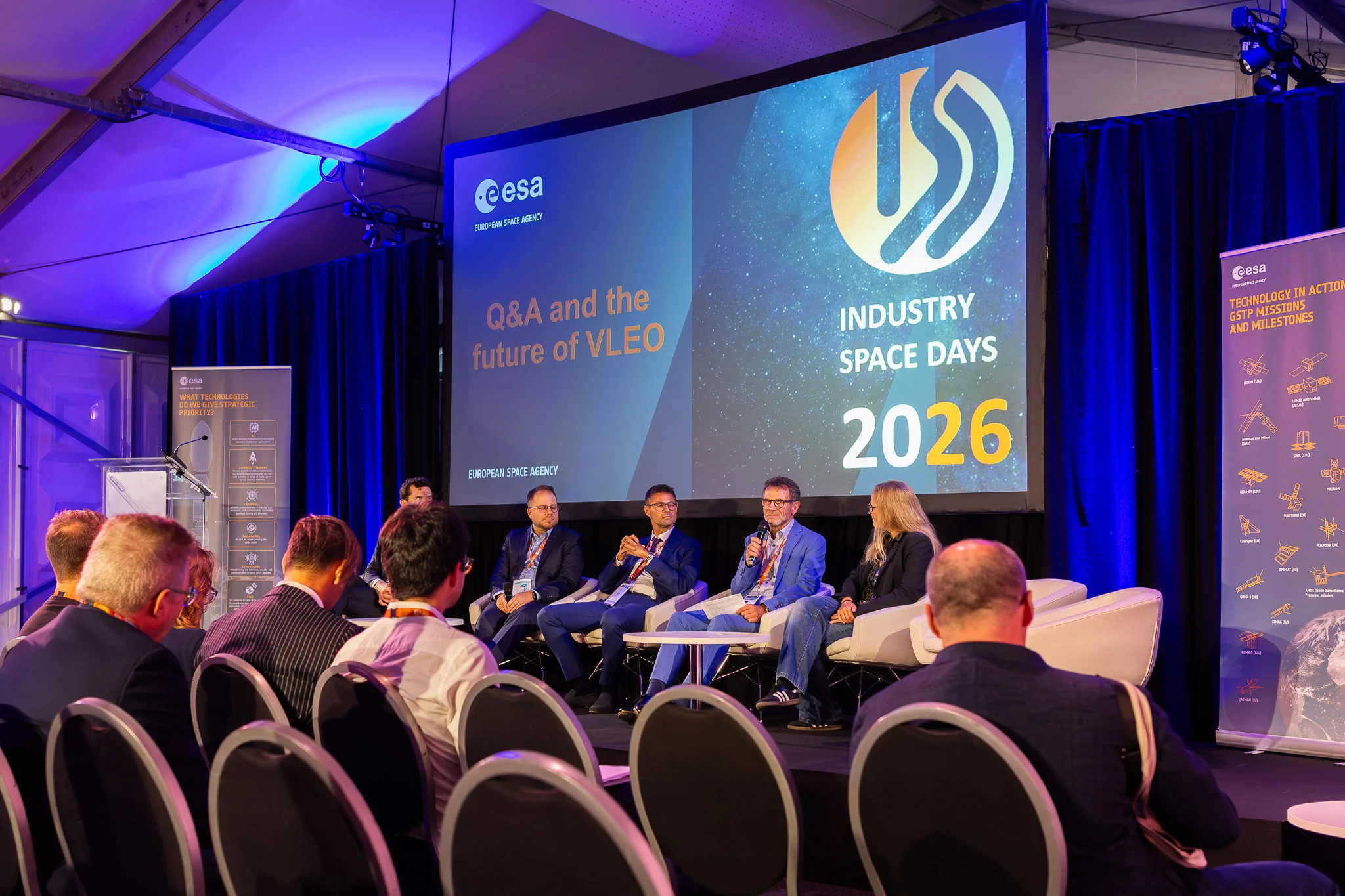 Panel discussion and Q&A on the future of Very Low Earth Orbit (VLEO) technologies at ESA Industry Space Days 2026 in Noordwijk.
Photo: Tomasz Pac / Iterative Engineering.
They promise new capabilities and bring new engineering and operational challenges with them.
Cybersecurity and VLEO deal with very different parts of space technology, yet in both areas progress makes systems harder to run reliably. Software engineering is one part of meeting that challenge, alongside advances in spacecraft hardware and communications.
What we take away from Noordwijk
ESA Industry Space Days 2026 gave a useful picture of an industry trying to reconcile ambitious technological goals with the everyday work of building sustainable businesses and reliable operations.
Europe needs a stronger industrial base and smoother cooperation, and companies with specialised expertise need easier access to opportunities. At the same time, the growing number of new space businesses is likely to bring operational challenges that spacecraft technology alone will not solve.
For Iterative Engineering, these developments confirm our interest in digital solutions for ground operations, including spaceport infrastructure and launch processes.
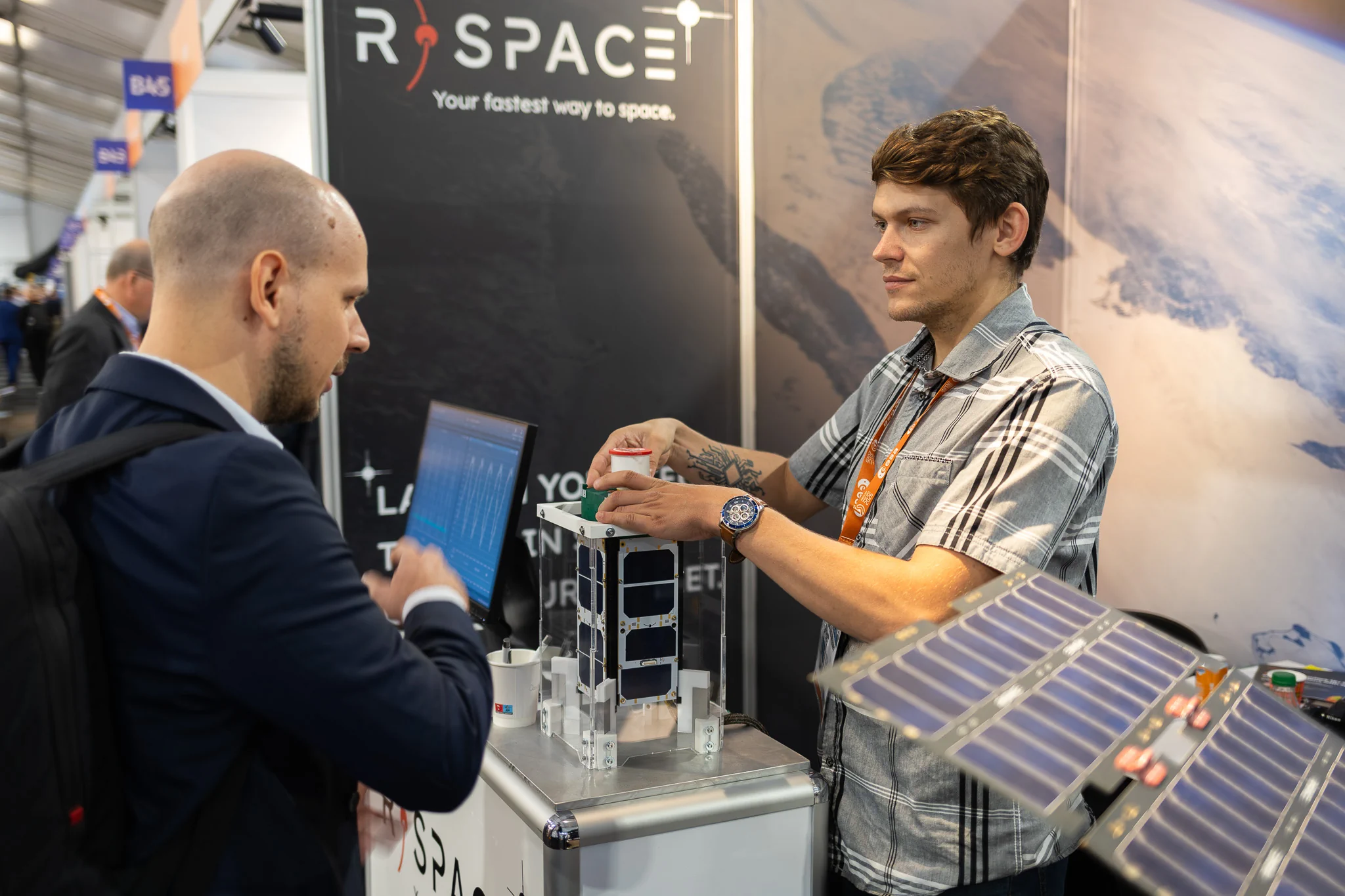 Paweł Grzywocz, CTO of Iterative Engineering, in conversation at an exhibition stand during ESA Industry Space Days 2026 in Noordwijk.
Photo: Tomasz Pac / Iterative Engineering.
We see opportunities to work with spaceport operators, launcher developers, system integrators and other organisations looking for a software engineering partner with experience in data integration and process automation.
The main lesson we brought back from Noordwijk concerns operations. New space technologies will only deliver their full value if the systems and processes for running them keep pace, and that is where we see a real role for our expertise.
Hero image: ESA Industry Space Days 2026 at ESTEC in Noordwijk, the Netherlands.
Photo: Benjamin Arthur Photography
Source: ESA Industry Space Days 2026 official photo gallery.
- Record attendance brings opportunities, but also stronger competition
- Europe wants greater technological autonomy without isolation
- Administrative complexity remains a barrier to faster development
- Expertise from other industries is finding its way into space
- Ground operations software is a specialised market, with new needs emerging
- Cybersecurity and VLEO are introducing new technical challenges
- What we take away from Noordwijk